Compare
Pick two boards from the directory and see how they differ.
Shaded rows are where they differ.
| Spec | 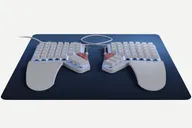 ZSA ZSA Moonlander $365–$380 “ZSA's modular, hot-swap split with a tilting thumb cluster and tenting accessory” | 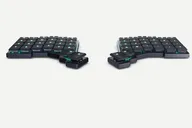 ZSA ZSA Voyager $365 “A 52-key, low-profile split with magnetic tenting legs and a travel case” |
|---|---|---|
| Price , different | $365–$380 | $365 |
| Size | Split | Split |
| Type | Pre-built | Pre-built |
| Connectivity | Wired | Wired |
| Released , different | 2020 | 2023 |
| Mounting | Not listed | Not listed |
| Case | Not listed | Not listed |
| Colors | Black, White | Black, White |
| Weight , different | About 675 g without wrist rests (about 800 g with them; the carrying case adds about 140 g) | 678 g total (217 g per half; the total includes cables, legs, leg holder and carrying case) |
| Dimensions , different | 17 cm wide x 25 cm deep x 3 cm high per half (depth includes the wing; 17 cm without it) | 14 cm wide x 14.5 cm deep x 1.6 cm high per half (height includes keycaps) |
| Typing angle , different | Tilting thumb module; tenting via an optional accessory; angles not listed | Magnetic tenting legs included; angles not listed |
| Front height , different | 3 cm per half (includes keycaps) | 1.6 cm per half (includes keycaps) |
| Switches , different | Mechanical | Low Profile |
| Profile , different | Standard | Low Profile |
| Keycaps , different | Doubleshot PBT, printed or blank | US, International or Blank sets; shine-through legends (ZSA) |
| PCB | Hot-swap | Hot-swap |
| Plates | Not listed | Not listed |
| Compatible switches , different | MX-style | Kailh Choc v1 |
| Software | QMK, Oryx, Keymapp | QMK, Oryx, Keymapp |
| NKRO | No | No |
| RGB | Yes | Yes |
| Features , different | Hot-swap, Wired, QMK, Per-key RGB, Tilting thumb cluster, Wrist rests | 52 keys, Low-profile Choc, Hot-swap, Wired, QMK, Per-key RGB, Tenting legs |
| Good for , different | People who want a heavily customizable, hot-swap split Heavy typists who want tenting and a thumb cluster Users who like a training app for a new layout | People who want a compact, portable split Laptop users who want a split on the go Anyone who wants QMK with a point-and-click editor |
| Skip if , different | Buyers who want wireless People who need a short learning curve Anyone on a tight budget | Buyers who want wireless People who want a full function row on dedicated keys Anyone who needs strong palm support or high tenting built in |
| Pros , different | Highly customizable with a training app (Tom's Guide) Hot-swappable switches that feel good to type on (Tom's Guide) Tilting thumb cluster with a wrist support that follows it (ZSA) Carrying case and two-year warranty (ZSA) Wide choice of MX-style switches (ZSA) | 52-key layout, 16 mm thick: very small footprint (PC Gamer) Hot-swappable Choc switches in four feels (ZSA) Tenting legs, carrying case and extra keycaps in the box (ZSA) Open-source QMK with a browser editor (ZSA) Two-year warranty (ZSA) |
| Cons , different | Steep learning curve (Tom's Guide, The Verge) Halves can feel light and shift on the desk (Tom's Guide) No wireless option (PC Gamer) Very expensive (PC Gamer, The Verge) Blank keycaps are confusing at first (PC Gamer) | No wireless option (PC Gamer, ZSA) Few keys, so function keys and more live on layers (PC Gamer) Limited palm support and modest tenting reported by longer-term owners (danieldk, Neil Grogan) Expensive at USD 365 (PC Gamer, Notebookcheck) Choc v1 switches described as a little scratchy (Notebookcheck) |
| Research take , different | A well-regarded, modular wired split. Reviewers like the customization and typing feel, and mainly fault the adjustment period, the price and the lack of wireless. | A compact, well-documented wired split. Reviewers praise its size and software and mainly fault the missing wireless, the layer-heavy layout and the price. |