Compare
Pick two boards from the directory and see how they differ.
Shaded rows are where they differ.
| Spec | 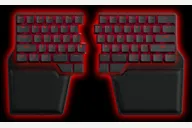 Dygma Dygma Raise 2 $369–$619 “A 60%-style split with thumb keys; wireless, tenting and underglow are paid add-ons” | 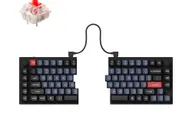 Keychron Keychron Q11 $205 “Split 75% aluminum Q with a knob on each half” |
|---|---|---|
| Price , different | $369–$619 | $205 |
| Size | Split | Split |
| Type | Pre-built | Pre-built |
| Connectivity , different | Wireless + Wired | Wired |
| Released , different | 2024 | 2023 |
| Mounting , different | Not listed | Tray Mount |
| Case , different | Brushed anodized aluminum key plate (Dygma) | All-metal |
| Colors , different | Not listed | Carbon Black - A, Carbon Black - B, Carbon Black |
| Weight , different | About 1 kg | 1186 ± 10 g (fully assembled) |
| Dimensions , different | 332 x 202 x 36 mm (Dygma spec) | 75% |
| Typing angle , different | Optional tenting, 0 to 60 degrees (add-on) | Not listed |
| Front height , different | 36 mm | Not listed |
| Switches | Mechanical | Mechanical |
| Profile | Standard | Standard |
| Keycaps , different | PBT double-shot (English US and UK); laser-etched OEM profile for Dash and non-English | Double-shot PBT |
| PCB , different | Hot-swap (64 MX sockets on ANSI plus 4 Kailh Choc sockets) | Hot-swap |
| Plates , different | Brushed anodized aluminum key plate | Not listed |
| Battery , different | Wireless version: 2370 mAh per half (4740 mAh total) | — |
| Compatible switches , different | MX-style (main keys) and Kailh Choc (4 thumb keys) | MX-style |
| Software , different | Not listed | QMK, Keychron Launcher |
| NKRO | Yes | Yes |
| RGB , different | Yes | No |
| Features , different | 60% layout, Hot-swap, Wired base, Optional wireless, Optional tenting, Per-key RGB, Aluminum key plate | 75% layout, Wired, Hot-swap, QMK/VIA, Knob |
| Good for , different | People who want a split on a 60% layout Buyers who want hot-swap and optional wireless Users who want to add tenting later | People who want a split board for posture comfort Macro-heavy workflows Users who want a premium metal split with VIA |
| Skip if , different | Buyers on a budget Anyone who wants wireless and tenting without extra cost People who want a function row on dedicated keys | Anyone who expects tenting out of the box Buyers who want wireless People who need a short learning curve |
| Pros , different | Offers a lot of hardware and features (AppleInsider) Hot-swap for both MX and Choc switches (Dygma) Wired base with optional wireless and tenting (Dygma) Very well packaged (AppleInsider) Two-year warranty (Dygma) | Fully split design with adjustable spacing and angle (PCWorld) Premium all-metal construction at about 1.2 kg (Keychron) Dedicated macro keys and a knob on each half (Tom's Guide, PCWorld) Highly customizable with QMK/VIA (Tom's Guide, PCWorld) Hot-swap sockets and a 75% layout with function and arrow keys PCWorld rated its price competitive against cheaper ergonomic boards |
| Cons , different | Price of admittance too high for most users (AppleInsider) Wireless, tenting and underglow are paid extras (Dygma) Learning curve for a split layout with layers Palm pad replacements cost extra, USD 39 (AppleInsider) | Steep learning curve (Tom's Guide) No tenting kit or wrist rest (Tom's Guide, PCWorld) Short cable between modules (Tom's Guide) Slightly awkward layout around the left spacebar (PCWorld) Wired only Expensive (Tom's Guide) |
| Research take , different | A feature-rich split on a 60% layout. AppleInsider praised the hardware and packaging and faulted the price once add-ons are included. | A well-regarded premium split keyboard. Reviewers liked the build and customization and mainly faulted the missing tenting kit, short cable and layout quirks. |