MonsGeek
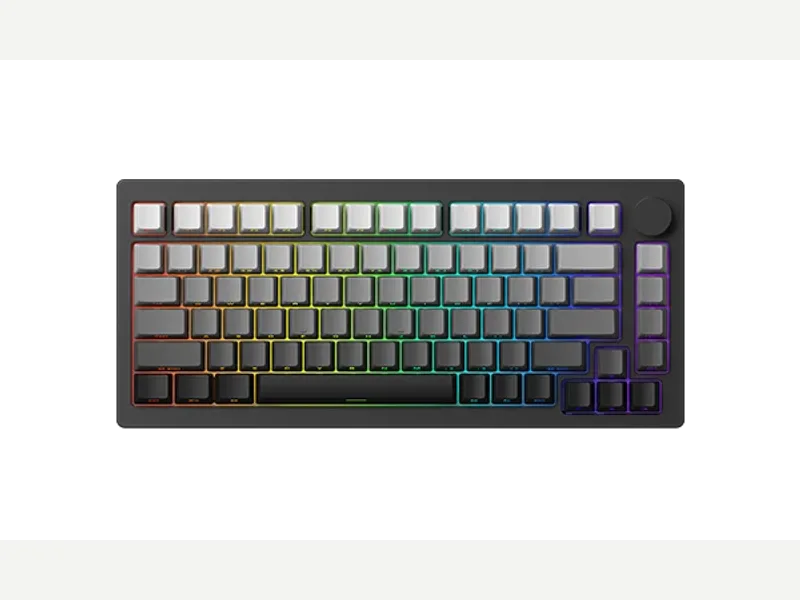
MonsGeek M1 V5 TMR
Released 2026
Researched from maker specs and published sources. Last checked Oct 18, 2026.
The TMR M1
The M1 V5 with TMR magnetoresistance sensors that accept both magnetic and mechanical switches on one board. Reviewers found it fast and well built; software and a hidden mode switch are the complaints.
Sources
Our take, based on research
An excellent value for a premium-feeling magnetic 75% if you accept rough software. The mixed-switch support is the reason to choose it over the HE.
Overview
The M1 V5 TMR is the version of the M1 V5 built around tunnel magnetoresistance (TMR) sensors. MonsGeek lists a 75% CNC aluminum case up to 1.83 kg, hot-swap sockets for 3-pin and 5-pin mechanical switches as well as magnetic ones, 8,000 Hz polling over USB and 2.4GHz, tri-mode wireless, an 8,000 mAh battery and a programmable knob. A switch type can be mixed key by key, so a player can put magnetic switches on WASD and mechanical switches elsewhere.
HLPlanet's reviewer weighed it at 1.8 kg, praised the screwless ball-catch case (though top and bottom feel slightly loose when lifted), the lubed stabilizers and a soft gasket feel with moderate flex. It was mixed on the stock side-printed keycaps and judged the web software functional but still rough. It also concluded the practical gap between TMR and Hall effect is small, so TMR alone is not a reason to buy. GamingTrend liked the construction, switch response and looks, but found the mode switch hidden under the caps key and the knob limited. Gamepad Squire scored it 8.5/10, citing the aluminum build and mixed-switch support, and listing software quirks, the hidden switch and some reports of wireless dropouts as drawbacks.
Pick this over the HE if you want the option to run mechanical switches. Otherwise the HE gives the same chassis for less.
Pros & Cons
- Mixes magnetic and mechanical switches on one board (MonsGeek)
- Aluminum quick-release case; HLPlanet measured 1.8 kg
- 8,000 Hz polling over USB and 2.4GHz and an 8,000 mAh battery
- Gasket feel with lubed stabilizers (HLPlanet)
- Gamepad Squire rated it 8.5/10
- Software described as functional but rough (HLPlanet, Gamepad Squire)
- Mode switch hidden under the caps key (GamingTrend, Gamepad Squire)
- A minority of reports of wireless dropouts (Gamepad Squire)
- HLPlanet found little practical gain from TMR over Hall effect
- Top and bottom of the case can feel slightly loose when lifted (HLPlanet)
Who Is This For?
- Gamers who want elite response and the freedom to use mechanical switches
- Builders who like a tool-free metal case
- People who want a heavy, premium-feeling wireless board
- Buyers who want the lowest price (the HE is cheaper)
- Anyone who dislikes tuning software
- People who want open VIA remapping
Where to Buy
Dimensions
Not listed
Weight
Not listed
Case Material
Aluminum
Connectivity
Both
Plate Options
Case Colors
Software Support
Similar Keyboards
View all
Looking for something different?
Browse All Keyboards