Keychron
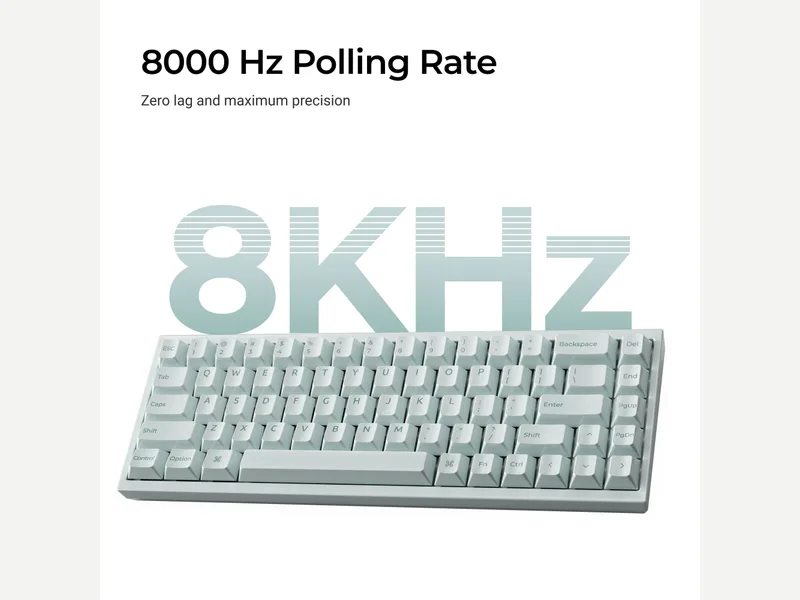
Keychron Q16 HE 8K
Released 2025
Researched from maker specs and published sources. Last checked Oct 18, 2026.
All-ceramic 65% magnetic Q with 8 kHz polling
A wired 65% Q with a ceramic case and keycaps, Keychron Lime magnetic switches and 8000 Hz polling, about 1.06 kg. Reviews split: Tom's Guide likes it, WIRED scored it 4 out of 10.
Sources
Our take, based on research
A novelty with real performance specs. Reviewers disagree sharply: Tom's Guide recommends it, WIRED gave it 4 out of 10, and Tom's Hardware and Windows Central flag sound, smudges and price. Buy for the look and the 8 kHz gaming features, not for the typing sound.
Overview
The Q16 HE 8K is Keychron's fully ceramic keyboard: the case and Cherry-profile keycaps are die-cast ceramic, with a gasket mount, aluminum plate, Keychron Ultra-fast Lime magnetic switches, Rapid Trigger, 8000 Hz polling and the Keychron Launcher. Keychron lists 65% layout, wired USB-C only, 110.8 x 315 mm and 1,060 g.
Reviews diverge sharply. Tom's Guide recommended it, finding the ceramic design beautiful, the typing lovely, the sound pretty nice and the firmware customization strong, with a high price, limited switches and wired-only 65% as downsides. Windows Central praised the design, typing experience and Launcher software but warned of smudges, chipping risk and a loud sound, and said it is heavy and not for carrying. Tom's Hardware found the typing experience underwhelming and expensive, noting it attracts fingerprints and does not sound or feel better than non-ceramic boards; it measured 2.34 lb (1,060 g). WIRED scored it 4 out of 10, citing underwhelming typing sound, wired-only use, a heavy and resonant spacebar, and an all-ceramic build that it said does not justify itself beyond novelty, while praising TMR sensors, smooth switches and 8 kHz polling.
WIRED also notes these are TMR (tunneling magnetoresistance) sensors, which it describes as technically distinct from Hall effect switches; Keychron's own listing calls it a magnetic switch.
Pros & Cons
- Striking all-ceramic design (Tom's Guide, Windows Central)
- 8000 Hz polling, Rapid Trigger and a deep gaming feature set (Tom's Guide, WIRED)
- Smooth switches and TMR sensors (WIRED)
- Intuitive Keychron Launcher software (Windows Central)
- Compact 65% layout at about 1.06 kg, far lighter than other Q boards
- Hot-swappable PCB (Tom's Hardware), though Tom's Guide found few switches to swap in
- Typing experience underwhelming and expensive (Tom's Hardware)
- WIRED found the sound underwhelming and the spacebar heavy and resonant
- Smudges are guaranteed and chipping is a risk (Windows Central)
- Wired only, with limited switch choice (Tom's Guide)
- Attracts fingerprints (Tom's Hardware)
- Loud: Windows Central said everyone will hear you typing
Who Is This For?
- Buyers who want a statement keyboard on the desk
- Players who want 8 kHz in a small layout
- Anyone who values looks over acoustics
- Typists who prioritize a deep, damped sound
- Anyone who wants wireless
- People who carry their keyboard or dislike fingerprints
Where to Buy
Dimensions
110.8 x 315mm
Weight
1060g ± 10g
Case Material
Ceramic
Connectivity
Wired
Plate Options
Case Colors
Software Support
Similar Keyboards
View all
Looking for something different?
Browse All Keyboards